
Pain Evaluation and Management in Patients with Dementia: A Retrospective Study in a Medical Department of a Tertiary Hospital
DOI:
https://doi.org/10.24950/rspmi.2791Keywords:
Aged, Dementia, Hospitalization, Pain, Pain Management, Pain MeasurementAbstract
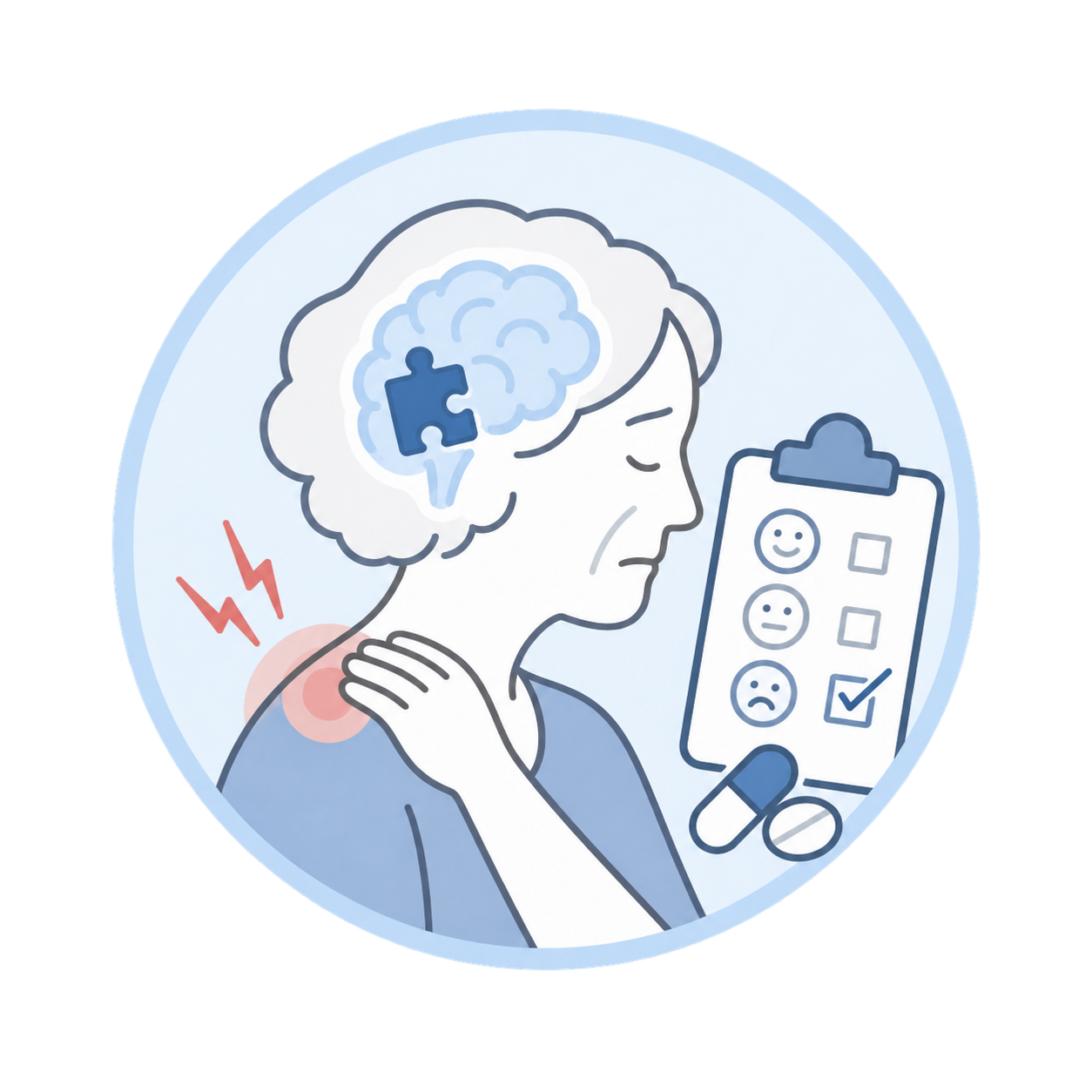
Introduction: Pain is common among elderly patients and poses specific challenges in dementia due to impaired communication and limited use of validated assessment tools.
Methods: To assess the prevalence, characteristics, and management of pain in hospitalized patients with dementia, compared with those without, we conducted a retrospective observational study including all patients admitted to an internal medicine ward between December 5–7, 2022. Cognitive status was determined by the assistant medical team. Patients were excluded if they did not have record of pain assessment, if they died or were discharged before the 72 hours-period evaluation. Pain was evaluated using the Numeric Rating Scale and the Pain Assessment in Advanced Dementia (PAINAD) scale. Demographic, clinical, and analgesic data were analysed according to the WHO analgesic ladder.
Results: A total of 114 patients were included, 54.4% with dementia, median age 81 (IQR 13.0). Overall pain prevalence was 45.6%, with no significant difference between groups (p=0.67). The Numeric Rating Scale was used in 24.6% of all cases and PAINAD in 9.6% of patients with dementia. No moderate or severe pain was documented in this group. Most patients (88.6%) with pain had at least one analgesic prescribed, with no differences in opioid use between the two groups. No non-pharmacological interventions were recorded.
Conclusion: Pain was frequent but often underrecognized and undertreated in patients with dementia. Structured assessment protocols and team training are essential to improve pain management in this population.
Downloads
References
1. Santana I, Farinha F, Freitas S, Rodrigues V, Carvalho Á. Epidemiologia da Demência e da Doença de Alzheimer em Portugal: Estimativas da Prevalência e dos Encargos Financeiros com a Medicação. Acta Med Port. 2015;28:182–8.
2. World Health Organization. Leading causes of death globally [Internet]. [accessed May 2025] Available from: https://www.who.int/news-room/fact-sheets/detail/the-top-10-causes-of-death
3. Torvik K, Kaasa S, Kirkevold, Rustøen T. Pain in patients living in Norwegian nursing homes. Palliat Med. 2009;23:8–16.
4. Feast AR, White N, Lord K, Kupeli N, Vickerstaff V, Sampson EL. Pain and delirium in people with dementia in the acute general hospital setting. Age Ageing. 2018;47:841–6. doi: 10.1093/ageing/afy112.
5. Raja SN, Carr DB, Cohen M, Finnerup NB, Flor H, Gibson S, et al. The revised International Association for the Study of Pain definition of pain: concepts, challenges, and compromises. Pain. 2020;161:1976–82. doi: 10.1097/j.pain.0000000000001939.
6. Anderson AR, Parish AL, Monroe T. Assessment and management of pain in persons with dementia. Geriatr Nurs. 2018;39:358–60. doi: 10.1016/j. gerinurse.2018.04.010.
7. Warden V, Hurley AC, Volicer L. Development and Psychometric Evaluation of the Pain Assessment in Advanced Dementia (PAINAD) Scale. J Am Med Dir Assoc. 2003;4:9–15.
8. Direção-Geral da Saúde. Programa Nacional do Estudo da Dor. Circular Normativa. Lisboa: DGS; 2008.
9. Bustamante-Fermosel A, Chacón-Moreno AD, Hennekinne L, Gil-Gil F, Notario-Leo H, Larrainzar-Garijo R, et al. Screening Tools for the Early Identification of Palliative Care Needs in Patients with Advanced Chronic Conditions: An Updated Systematic Review. J Clin Med. 2026;15:919. doi: 10.3390/jcm15030919.
10. Yang J, Bauer BA, Wahner-Roedler DL, Chon TY, Xiao L. The modified WHO analgesic ladder: Is it appropriate for chronic non-cancer pain? J Pain Res. 2020;13:411–7. doi: 10.2147/JPR.S244173.
11. Nogueira V, Lagarto L, Firmino H, Cerejeira J. P-409 - Setting a new liaison old age psychiatry service in coimbra university hospital. Eur Psychiatry. 2012;27:1.
12. Feast AR, White N, Lord K, Kupeli N, Vickerstaff V, Sampson EL. Pain and delirium in people with dementia in the acute general hospital setting. Age Ageing. 2018;47:841–6. doi: 10.1093/ageing/afy112.
13. Torvik K, Kaasa S, Kirkevold, Rustøen T. Pain in patients living in Norwegian nursing homes. Palliat Med. 2009;23:8–16.
14. Achterberg W, Lautenbacher S, Husebo B, Erdal A, Herr K. Pain in dementia. Pain Rep. 2020;5:E803. doi: 10.1097/PR9.0000000000000803.
15. Mason XL. Challenges to the Diagnosis of Functional Neurological Disorder: Feigning, Intentionality, and Responsibility. Neuroethics. 2023;16:2. doi: 10.1007/s12152-022-09509-8.
16. Alorfi NM. Pharmacological Methods of Pain Management: Narrative Review of Medication Used. Int J Gen Med. 2023;16:3247-3256. doi: 10.2147/IJGM.S419239.
Downloads
Published
How to Cite
Issue
Section
Categories
License
Copyright (c) 2026 Portuguese Journal Internal Medicine

This work is licensed under a Creative Commons Attribution 4.0 International License.