
Artificial Intelligence: Challenges for Research, Scientific Outcomes, and Academic Publishing
DOI:
https://doi.org/10.24950/rspmi.2880Keywords:
Artificial Intelligence, Ethics, Research, Generative Artificial Intelligence, Publishing, Scientific Misconduct, Scholarly CommunicationAbstract
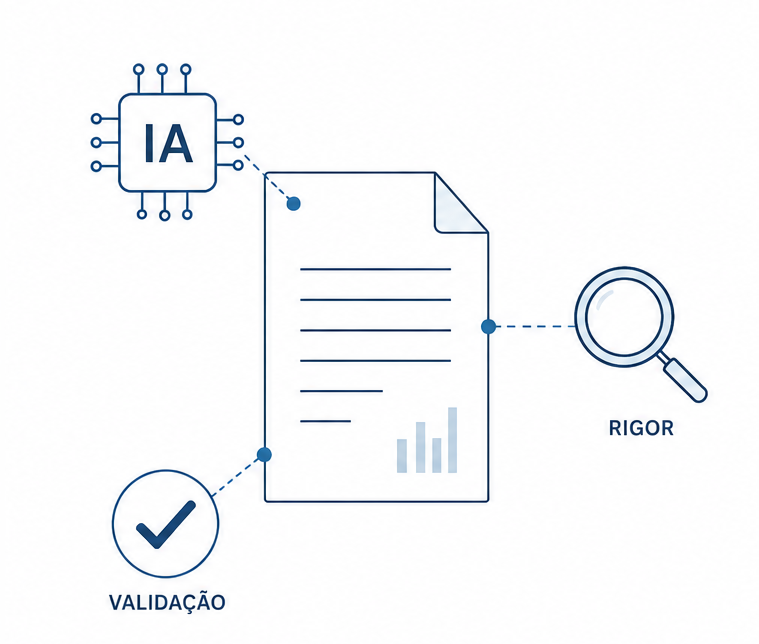
Within just a few years, Artificial Intelligence (AI) has become one of the most transformative forces in contemporary science. Its impact reaches far beyond the technological domain, extending to how we conduct research, write, validate results, communicate knowledge, and assess scientific output. The central question of this reflection is how to integrate AI into research and scientific publishing without compromising fundamental values such as truth, rigour, transparency, accountability, and fairness.
Downloads
References
1. Stokel-Walker C, Van Noorden R. What ChatGPT and generative AI mean for science. Nature. 2023;614:214-6. doi: 10.1038/d41586-023-00340-6.
2. Russell S, Norvig P. Artificial Intelligence: A Modern Approach. 4.ª ed. Yorkshire: Pearson; 2021.
3. Goodfellow I, Bengio Y, Courville A. Deep Learning. Massachusetts:MIT Press;2016.
4. Bender EM, Gebru T, McMillan-Major A, Shmitchell S. On the dangers of stochastic parrots: Can language models be too big? In: Proceedings of the 2021 ACM Conference on Fairness, Accountability, and Transparency. p. 610–23.
5. Hochreiter S, Schmidhuber J. Long short-term memory. Neural Computation. 1997;9:1735–80.
6. Gers FA, Schmidhuber J, Cummins F. Learning to forget: Continual prediction with LSTM. Neural Computation. 2000;12:2451–71.
7. Vaswani A, Shazeer N, Parmar N, Uszkoreit J, Jones L, Gomez AN, et al. Attention is all you need. Adv Neural Informat Process Syst. 2017; 30:5998–6008.
8. Brown TB, Mann B, Ryder N, Subbiah M, Kaplan J, Dhariwal P, et al. Language models are few-shot learners. Adv Neural Informat Process Syst. 2020;33:1877–901.
9. Andrade F, Novais P, Machado J, Neves J. Contracting agents: Legal personality and representation. Artif Intell Law. 2007;15.
10. Bourtoule L, Chandrasekaran V, Choquette-Choo CA, Jia H, Travers A, Zhang B, et al. Machine unlearning. In: 2021 IEEE Symposium on Security and Privacy (SP). P. 141–59.
11. Machado J, Sousa R, Peixoto H, Abelha A. Ethical Decision-Making in Artificial Intelligence: A Logic Programming Approach. AI. 2024; 5:2707-24. doi: 10.3390/ai5040130
12. Tools such as ChatGPT threaten transparent science; here are our ground rules for their use. Nature. 2023;613:612. doi: 10.1038/d41586-023-00191-1.
13. Parlamento Europeu & Conselho da União Europeia. Regulamento (UE) 2024/1689 do Parlamento Europeu e do Conselho, de 13 de junho de 2024, que estabelece regras harmonizadas em matéria de inteligência artificial (Regulamento da Inteligência Artificial). J Ofic União Europeia: 2024; L1689.
14. Doshi-Velez F, Kim B. Towards a rigorous science of interpretable machine learning. arXiv preprint arXiv, 2017:1702.08608.
15. Gala A, Marcondes F, Rodrigues M, Machado J, Novais P. Semiotic ablation as an interface-level XAI method for analyzing generative uncertainty in large language models. In: Proceedings of the 4th World Conference on eXplainable Artificial Intelligence (XAI 2026). Lecture Notes Comput Sci. 2026 (in press).
16. Gala A, Marcondes F, Machado J, Novais P. Designing a local RAG-based intelligent tutoring system for domain-specific education. In: Proceedings of the 39th International Conference on Industrial, Engineering and Other Applications of Applied Intelligent Systems (IEA/AIE 2026). IEEE. 2026 (in press).
Downloads
Published
How to Cite
License
Copyright (c) 2025 Portuguese Journal Internal Medicine

This work is licensed under a Creative Commons Attribution 4.0 International License.