
Protocolo de Rastreio de Porfiria Aguda no Serviços de Urgência: Estratégia para Diagnóstico Precoce
DOI:
https://doi.org/10.24950/rspmi.2769Palavras-chave:
Dor Abdominal, Heme, Porfiria Aguda Intermitente/diagnóstico, Serviço de Urgência HospitalarResumo
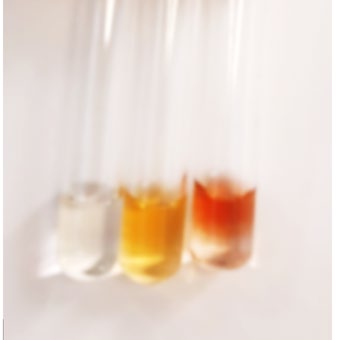
As porfirias agudas são doenças metabólicas raras, resultantes de defeitos na via de biossíntese do heme. Estas condições são clinicamente caracterizadas por crises neuro viscerais agudas, sintomas crónicos e complicações a longo prazo. Perante a apresentação clínica inespecífica e o baixo índice de suspeição clínica, os atrasos no diagnóstico são recorrentes, resultando em morbimortalidade evitáveis. Para mitigar este impacto clínico, propõe-se um protocolo de rastreio estruturado e clinicamente exequível para a deteção precoce das porfirias agudas, a ser implementado no Serviço de Urgência (SU), uma vez que existe elevada probabilidade de o doente em crise necessitar de cuidados hospitalares urgentes. A população-alvo para este rastreio inclui doentes que se apresentem no SU com dor abdominal aguda inexplicada, polineuropatia aguda ou subaguda, ou psicose aguda (especificamente, primeiros episódios, apresentações atípicas ou casos refratários ao tratamento). Dada a frequente indisponibilidade de acesso imediato a testes bioquímicos quantitativos no contexto do SU, o teste de Hoesch emerge como uma ferramenta crucial por ser um método qualitativo rápido e de baixo custo para detetar as elevações de porfobilinogénio (PBG) urinário, um achado característico da maioria das crises de porfiria aguda. Apesar das suas limitações inerentes, incluindo o potencial para resultados falso negativo no subtipo mais raro de porfiria aguda e a sua natureza operador-dependente, a implementação sistemática deste protocolo, oferece uma estratégia essencial para otimizar o reconhecimento precoce da porfiria aguda e, consequentemente, reduzir a morbimortalidade associada ao diagnóstico tardio.
Downloads
Referências
Wang B, Ventura P, Takase KI, Thapar M, Cassiman D, Kubisch I, et al. Disease burden in patients with acute hepatic porphyria: experience from the phase 3 ENVISION study. Orphanet J Rare Dis. 2022;17:327. doi: 10.1186/s13023-022-02463-x.
Wang B, Bonkovsky HL, Lim JK, Balwani M. AGA Clinical Practice Update on Diagnosis and Management of Acute Hepatic Porphyrias: Expert Review. Gastroenterology. 2023;164: 484–91. doi:10.1053/j.gastro.2022.11.034
Gouya L, Ventura P, Balwani M, Bissell DM, Rees DC, Stölzel U, et al. EXPLORE: A Prospective, Multinational, Natural History Study of Patients with Acute Hepatic Porphyria with Recurrent Attacks. Hepatology. 2019;71:1546–58. Doi:10.1002/hep.30936
Elder G, Harper P, Badminton M, Sandberg S, Deybach JC. The incidence of inherited porphyrias in Europe. J Inherit Metab Dis. 2013;36:849-57. doi: 10.1007/s10545-012-9544-4.
Lenglet H, Schmitt C, Grange T, Manceau H, Karboul N, Bouchet-Crivat F, et al. From a dominant to an oligogenic model of inheritance with environmental modifiers in acute intermittent porphyria. Hum Mol Genet. 2018;27:1164-73. doi: 10.1093/hmg/ddy030.
Barreda-Sánchez M, Buendía-Martínez J, Glover-López G, Carazo-Díaz C, Ballesta-Martínez MJ, López-González V, et al. High penetrance of acute intermittent porphyria in a Spanish founder mutation population and CYP2D6 genotype as a susceptibility factor. Orphanet J Rare Dis. 2019;14:59. doi: 10.1186/s13023-019-1031-7.
Anderson KE, Desnick RJ, Stewart MF, Ventura P, Bonkovsky HL. Acute Hepatic Porphyrias: "Purple Flags"-Clinical Features That Should Prompt Specific Diagnostic Testing. Am J Med Sci. 2022;363:1-10. doi: 10.1016/j.amjms.2021.09.009.
Oliveira Santos M, Leal Rato M. Neurology of the acute hepatic porphyrias. J Neurol Sci.2021;428,117605. doi:10.1016/j.jns.2021.117605
Anderson KE. Acute hepatic porphyrias: Current diagnosis & management. Mol Genet Metab. 2019;128:219-27. doi: 10.1016/j.ymgme.2019.07.002.
Jaramillo-Calle DA, Solano JM, Rabinstein AA, Bonkovsky HL. Porphyria-induced posterior reversible encephalopathy syndrome and central nervous system dysfunction. Mol Genet Metab. 2019;128:242-53. doi: 10.1016/j.ymgme.2019.10.011.
Bonkovsky HL, Dixon N, Rudnick S. Pathogenesis and clinical features of the acute hepatic porphyrias (AHPs). Mol Genet Metab. 2019;128:213-8. doi: 10.1016/j.ymgme.2019.03.002.
Pflock S, Mücke HC, Somasundaram R. 04130 Acute porphyrias as a prime example for (unrecognized) rare but treatable disease in the emergency department: a patient survey and systematized literature review. BMJ Open Gastroenterol.2024;11.doi: 10.1136/bmjgast-2024-ICPP.80
Buttery JE, Carrera AM, Pannall PR. Reliability of the porphobilinogen screening assay. Pathology.1990;22:197–8.doi:10.3109/00313029009086660
Bonkovsky H, Barnard G. Diagnosis of Porphyric Syndromes: A Practical Approach in the Era of Molecular Biology. Semin Liver Dis.1998;18:57–65.doi:10.1055/s-2007-1007141
Badminton MN, Whatley SD, Sardh E, Aarsand AK. Porphyrins and the porphyrias. In Rifai N., Horvath AR., Wittwer CT, editors. Tietz textbook of clinical chemistry and molecular diagnostics. 6th ed. St Luis: Elsevier;2018. p.776-880
Bhasuran B, Schmolly K, Kapoor Y, Jayakumar NL, Doan R, Amin J, et al. Reducing diagnostic delays in Acute Hepatic Porphyria using electronic health records data and machine learning: a multicenter development and validation study. medRxiv. J Am Med Inform Assoc. 2025;32:63-70. doi: 10.1093/jamia/ocae141.
Edel Y, Mamet R, Cohen S, Shepshelovich D, Levi A, Sagy I. The clinical importance of early acute hepatic porphyria diagnosis: a national cohort. Intern Emerg Med. 2021;16:133-9. doi: 10.1007/s11739-020-02359-3.
Gilles A, Vermeersch S, Vermeersch P, Wolff F, Cotton F, Tilleux S, et al. Expert consensus statement on acute hepatic porphyria in Belgium. Acta Clin Belg. 2022;77:735-41. doi: 10.1080/17843286.2021.1961056.
Wan, B, Bonkovsky, HL, Lim JK, Balwani M. AGA Clinical Practice Update on Diagnosis and Management of Acute Hepatic Porphyrias: Expert Review. Gastroenterology. 2023;164:484–91. Doi:10.1053/j.gastro.2022.11.03
Woolf J, Marsden JT, Degg T, Whatley S, Reed P, Brazil N, et al. Best practice guidelines on first-line laboratory testing for porphyria. Ann Clin Biochem. 2017;54:188-98. doi: 10.1177/0004563216667965.
Gallagher CJ, Bentley L, Challenger R, Jones M, Schulenburg-Brand D . Stability of porphyrins and porphyrin precursors in urine and plasma samples: implications for sample handling and storage. J Clin Pathol.2024;77:574-8. doi:10.1136/jcp-2024-209443
Bonkovsky H, Barnard G. Diagnosis of Porphyric Syndromes: A Practical Approach in the Era of Molecular Biology. Semin Liver Dis.1998;18:57–65. doi:10.1055/s-2007-1007141
Szlendak U, Bykowska K, Lipniacka A. Clinical, Biochemical and Molecular Characteristics of the Main Types of Porphyria. Adv Clin Exp Med. 2016;25:361-8. doi: 10.17219/acem/58955.
Kühnel A, Gross U, Doss MO. Hereditary coproporphyria in Germany: clinical-biochemical studies in 53 patients. Clin Biochem. 2000;33:465-73. doi:10.1016/s0009-9120(00)00159-4.
Hift RJ, Davidson BP, van der Hooft C, Meissner DM, Meissner PN. Plasma fluorescence scanning and fecal porphyrin analysis for the diagnosis of variegate porphyria: precise determination of sensitivity and specificity with detection of protoporphyrinogen oxidase mutations as a reference standard. Clin Chem. 2004;50:915-23. doi: 10.1373/clinchem.2003.025213.
Daniels J, Griffiths M, Fisher E. Assessment and management of recurrent abdominal pain in the emergency department. Emerg Med J. 2020;37:515-21. doi: 10.1136/emermed-2019-209113.
Diehl-Wiesenecker E, Blaschke S, Wohmann N, Kubisch I, Stauch T, Mainert M, et al. Detect Acute Porphyrias in Emergency Departments (DePorED) – a pilot study. Orphanet J Rare Dis.2023,18. doi:10.1186/s13023-023-02768-5
Maxim LD, Niebo R, Utell MJ. Screening tests: a review with examples. Inhalation Toxicol. 2014;26: 811–28. doi:10.3109/08958378.2014.955932
Ventura P, Cappellini MD, Biolcati G, Guida CC, Rocchi E; Gruppo Italiano Porfiria (GrIP). A challenging diagnosis for potential fatal diseases: recommendations for diagnosing acute porphyrias. Eur J Intern Med. 2014;25:497-505. doi: 10.1016/j.ejim.2014.03.011.
Downloads
Publicado
Como Citar
Licença
Direitos de Autor (c) 2025 Medicina Interna

Este trabalho encontra-se publicado com a Creative Commons Atribuição-NãoComercial 4.0.